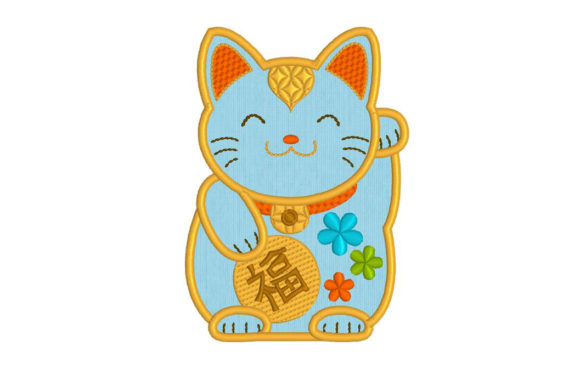
ManekiNeko Good Luck Cat
A Designer’s First Look: Charm with Quiet Confidence
When I opened the ManekiNeko Good Luck Cat embroidery file, what struck me first wasn’t just the iconic raised paw—it was the balance. The pose feels warm, not cartoonish; traditional, not stiff. There’s a gentle roundness to the face and body that reads well at 3–4 inches—the sweet spot for tote bags, aprons, and baby onesies. This isn’t a design shouting for attention. It’s the kind of embroidery that makes customers pause, smile, and say, “I need that on my kitchen towel.” As a designer who’s stitched hundreds of cats—from playful kittens to minimalist silhouettes—I appreciate how this one avoids over-detailing while still carrying unmistakable cultural resonance.
Where It Shines: Real Projects, Real Impact
I tested ManekiNeko Good Luck Cat on a natural linen tea towel, a midweight cotton sweatshirt, and a twill patch blank—and each time, it held up beautifully. On the towel, the satin-stitched paw and facial features popped without bleeding. On the sweatshirt, the fill stitch density felt generous but not heavy—no puckering, even with lightweight tear-away stabilizer. And as a patch? It framed perfectly in a 4x4 hoop, with clean edge definition ideal for iron-on or sewn application.
This is a go-to for small shop owners building cohesive collections: think matching nursery decor (pillow cover + onesie), boutique holiday gifts (embroidered mug rug + gift tag), or Etsy listings where handmade charm matters more than flash. It works especially well for custom apparel where subtlety builds trust—like a women’s boutique ordering embroidered caps for staff, or a café branding aprons with quiet, meaningful motifs. Customers recognize the symbol. They *feel* its intention. That’s rare in digital embroidery files—and invaluable for craft businesses selling personalized gifts.
Where to Pause—and Why
ManekiNeko Good Luck Cat isn’t magic on every surface. On thin or highly stretchy fabric—like lightweight jersey tees or baby knit bodysuits—I recommend testing stitch tension and backing carefully. Dense fill areas around the face can shift if stabilizer isn’t fully secured. Likewise, curved surfaces like baseball caps need re-hooping finesse: the cat’s rounded silhouette flows better on front panels than on steep crowns unless you adjust placement toward the flatter center.
Dark fabrics demand thoughtful thread choices. The design relies on contrast—especially in the eyes and paw outline—so avoid near-matching thread colors. And while it scales down decently, below 2.5 inches some delicate line work (like whisker hints or ear contour) softens. Not a dealbreaker—but worth checking in a black-and-white printable mockup before committing to 50 baby onesies.
Design Integrity Meets Commercial Sense
What elevates ManekiNeko Good Luck Cat beyond decoration is its consistency across contexts. Whether stitched solo on a minimalist pillow cover or paired with subtle Japanese-inspired kanji in a larger composition, it holds its voice. That reliability strengthens brand cohesion—critical for Etsy sellers curating themed shops (“Lucky Living,” “East Meets Craft”) or craft fair vendors building repeat buyers.
It also reads as intentional craftsmanship, not clip-art. No floating limbs, no awkward spacing between paw and body—just clean vector-derived outlines translated thoughtfully into stitch paths. That professionalism shows in finished products: customers photograph it, tag your shop, and describe it as “so well done” in reviews. That kind of organic credibility is gold for creative entrepreneurs.
Practical Notes Every Embroiderer Should Check
- Test first—on scrap fabric matching your final product’s weight and texture.
- Review stitch density—especially in the face and paw. Overly dense fills can overwhelm light fabrics.
- Confirm hoop size—most versions fit 4x4, but verify before batching orders.
- Inspect small details—whiskers, eye highlights, and ear curves should remain legible post-stitch.
- Try black-and-white mockups—to gauge clarity on both light and dark backgrounds.
- Match stabilizer to fabric—cutaway for knits, tear-away for stable wovens, fusible for patches.
- Check licensing—if selling finished items or reselling the embroidery file, confirm commercial use rights.
Final Thought: More Than a Cat—A Quiet Signature
I recently used ManekiNeko Good Luck Cat on a set of linen napkins for a local restaurant’s “Lucky Hour” promotion. Guests didn’t just notice the embroidery—they asked about it. That’s the quiet power of this design: it invites conversation, carries warmth, and lands with sincerity. It won’t dominate a busy garment, but it will anchor a collection. It won’t replace bold typography on a streetwear hoodie, but it’ll elevate a handmade baby blanket or a ceramicist’s market tote with grounded, joyful meaning.
For designers, crafters, and shop owners who value intention over trend—this isn’t just another cats embroidery file. It’s a reliable, culturally resonant design asset. One that stitches cleanly, sells thoughtfully, and stays true, project after project.